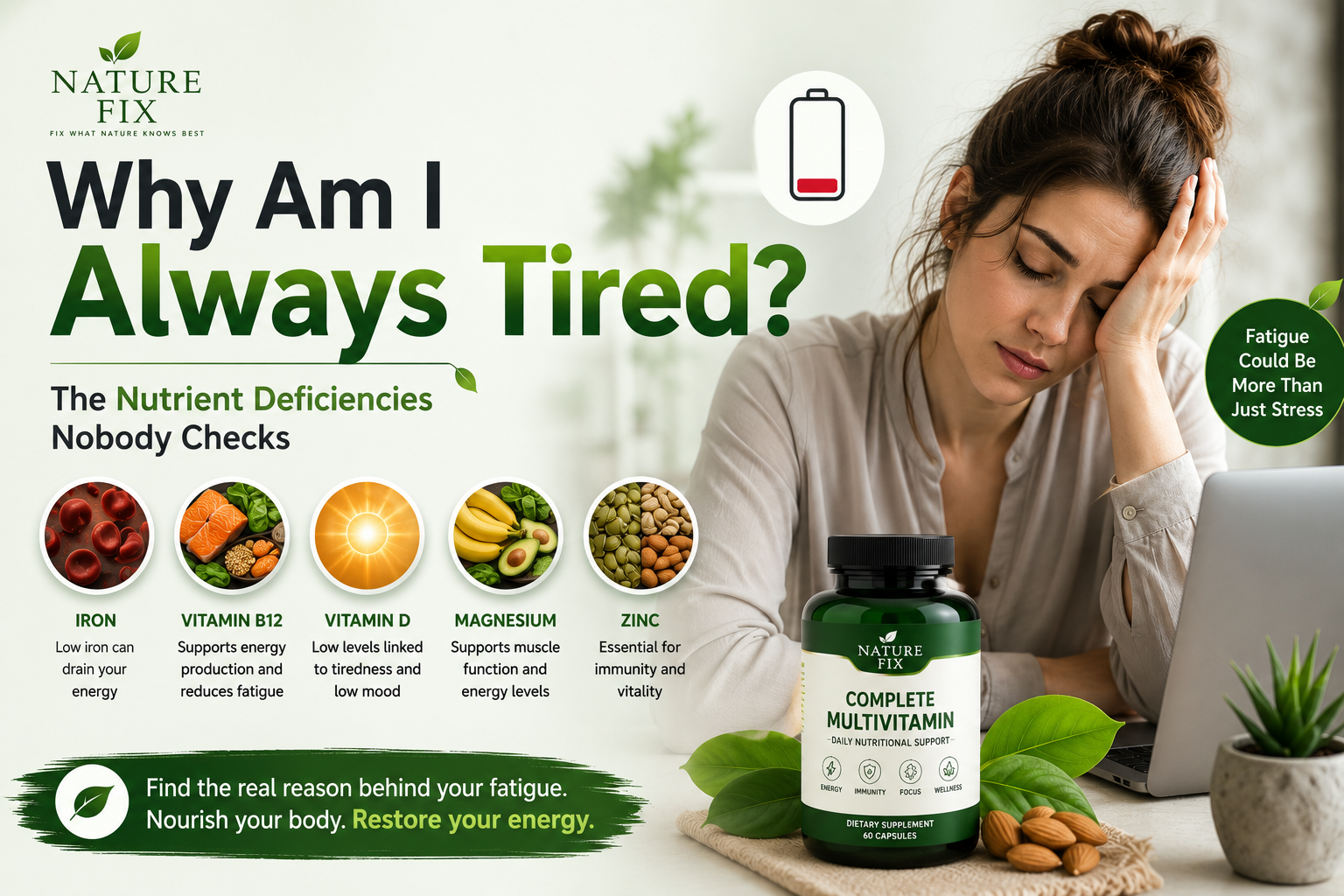
You slept seven hours. You had your coffee. You are not doing anything particularly demanding. And yet by mid-morning you already feel like you could sleep again. By the afternoon you are running on fumes. By the evening you are too tired to do the things you actually want to do.
This is not just a busy life. This is not just ageing. And it is not just stress although stress does not help.
For a significant number of people, persistent tiredness has a nutritional root. Specific vitamins and minerals are so central to how the body produces and uses energy that even a mild deficiency in one of them can leave you feeling drained in a way that no amount of sleep or coffee quite fixes.
The frustrating part is that these deficiencies are rarely checked. A standard blood test does not always include them. And because the symptoms are so vague tiredness, brain fog, low mood, poor concentration they get blamed on everything except the actual cause.
This guide covers the eight nutrients most likely to be behind persistent fatigue, how each one affects your energy, and what you can realistically do about it.
Why Nutrient Deficiencies Make You Tired
Energy in the human body is not a feeling it is a biological process. Every cell in your body produces energy through a chain of chemical reactions that require specific nutrients to work. When those nutrients are in short supply, the chain breaks down.
Your mitochondria the tiny structures inside every cell that generate usable energy cannot function without magnesium, B vitamins, CoQ10, and oxygen. Your red blood cells which carry oxygen to every tissue in your body cannot form properly without iron, B12, and folate. Your nervous system which controls how alert and focused you feel depends on vitamin D, B12, and Omega-3 fatty acids.
Remove any one of these from the equation and energy production slows. Remove several and the result is the kind of deep, persistent tiredness that does not respond to rest, caffeine, or simply trying harder.
The Eight Nutrients Most Likely Behind Your Fatigue
| Nutrient | How It Causes Fatigue | Who Is Most at Risk |
| Iron | Red blood cells cannot carry enough oxygen to tissues and muscles | Women, vegetarians, heavy exercisers |
| Vitamin B12 | Nerve signals slow, red blood cell production drops, energy metabolism stalls | Vegetarians, vegans, adults over 50 |
| Vitamin D | Mitochondria your cells energy factories function poorly without adequate D | Urban adults, desk workers, darker skin tones |
| Magnesium | ATP the molecule your body uses for every energy action requires magnesium to form | Stressed adults, athletes, anyone eating processed food |
| Folate (B9) | DNA repair and red blood cell production both depend on folate low levels cause cellular fatigue | Pregnant women, alcohol consumers, poor diet |
| Vitamin B1 | Carbohydrates cannot be converted into usable energy without thiamine present | Alcohol consumers, white rice-heavy diets |
| CoQ10 | The mitochondrial enzyme that drives energy production directly depletes with age and statin use | Adults over 40, statin medication users |
| Omega-3 | Brain neurotransmitter function declines, affecting mental energy and focus alongside physical fatigue | Most urban adults dietary gap is near universal |
Let us go through each of the most important ones in a bit more detail.
Iron The Oxygen Carrier
Iron is the mineral your red blood cells use to carry oxygen from your lungs to every muscle, organ, and tissue in your body. When iron is low, oxygen delivery drops and tiredness is one of the first and most noticeable results.
Iron deficiency is the most common nutritional deficiency in the world. Women of reproductive age are particularly vulnerable because of monthly blood loss. Vegetarians and vegans face a double challenge plant sources of iron are less well absorbed than meat sources, and certain compounds in plant foods can actually block iron absorption when consumed together.
- Symptoms: exhaustion that worsens with physical activity, pale skin, shortness of breath, brittle nails, cold hands and feet, difficulty concentrating
- Rich food sources: red meat, chicken, fish, lentils, spinach, pumpkin seeds, tofu, fortified cereals
- Absorption tip: pair plant-based iron sources with vitamin C it significantly increases how much iron your body actually takes in
Important: Do not supplement iron without a blood test confirming deficiency. Too much iron is harmful. Get tested first, then supplement only if levels are low.
Vitamin B12 The Energy and Nerve Vitamin
B12 is essential for producing red blood cells, maintaining healthy nerve function, and converting food into usable cellular energy. A shortage of B12 affects all three of these processes simultaneously which is why B12 deficiency causes a particularly heavy, pervasive kind of tiredness alongside brain fog and mood changes.
B12 exists almost exclusively in animal products. This makes vegetarians and vegans significantly more vulnerable and unlike most nutrients, B12 deficiency can take years to develop because the body stores some reserves. By the time symptoms are obvious, the deficiency is often substantial.
- Symptoms: extreme fatigue, pins and needles, memory problems, low mood, pale or yellowish skin, mouth sores
- Rich food sources: meat, fish, eggs, dairy, nutritional yeast (fortified), B12-fortified plant milks
- Who is at highest risk: vegetarians, vegans, adults over 50, people taking metformin or antacids long-term
Vitamin D The Cellular Energy Regulator
Vitamin D receptors are found in virtually every cell in the human body including the mitochondria that produce cellular energy. When vitamin D is low, these receptors cannot function properly, and energy production at the cellular level is compromised.
The result is a type of fatigue that often comes with low mood, muscle weakness, and a general sense of flatness that many people attribute to stress or depression. In India where vitamin D deficiency affects an estimated 70 to 90 percent of the urban population despite plentiful sunlight this is an extremely common and extremely underdiagnosed cause of persistent tiredness.
- Symptoms: constant tiredness, low mood, muscle weakness, frequent illness, bone aches, poor sleep
- Sources: sunlight (limited for most urban adults), oily fish, egg yolks, fortified foods
- Reality: food sources and sunlight are rarely enough for most adults supplementation is the most reliable solution
Magnesium The Energy Molecule Builder
Every single time your body makes ATP the molecule that powers every physical and mental action you take it requires magnesium to complete the process. Without adequate magnesium, your body cannot generate energy efficiently at the most fundamental level.
Magnesium is also essential for sleep quality, muscle relaxation, and nervous system regulation. A shortage therefore hits your energy from multiple directions simultaneously poor sleep because you cannot relax properly, plus impaired cellular energy production during the day.
- Symptoms: fatigue, poor sleep, muscle cramps, anxiety, headaches, constipation, difficulty switching off at night
- Rich food sources: dark leafy greens, pumpkin seeds, almonds, dark chocolate, legumes, whole grains
- The challenge: magnesium is depleted from soil, lost in food processing, and used up by stress making deficiency common even in people who eat reasonably well
Explore magnesium and energy support supplements at getnaturefix.com.
B Vitamins The Energy Conversion Team
The B vitamin family particularly B1, B2, B3, B5, and B6 are collectively involved in converting every macronutrient you eat (carbohydrates, protein, fat) into usable cellular energy. They do not provide energy themselves. They are the tools that enable your body to extract energy from the food you eat.
When B vitamins are low, food conversion becomes less efficient. You can eat plenty and still feel depleted because your body cannot complete the metabolic processes that turn food into actual energy.
- Symptoms: fatigue, brain fog, irritability, poor concentration, tingling in hands and feet, mouth sores
- Rich food sources: whole grains, meat, eggs, dairy, leafy greens, legumes, nutritional yeast
- Risk group: people under high stress, regular alcohol consumers, those on restrictive diets, vegetarians
Omega-3 The Brain Energy Nutrient
Most people associate Omega-3 with heart health and joints. But DHA the primary Omega-3 fatty acid in the brain is directly involved in how efficiently neurons communicate, how effectively neurotransmitters are produced, and how well your brain manages focus and mental energy throughout the day.
Low Omega-3 does not always cause physical fatigue in the traditional sense. It more often presents as mental exhaustion the feeling that thinking is harder than it should be, that focus dissolves quickly, and that mental tasks drain you faster than they used to.
- Symptoms: mental fatigue, poor concentration, low mood, brain fog, dry skin, joint stiffness
- Rich food sources: salmon, sardines, mackerel, herring, anchovies, walnuts, flaxseed
- The gap: most adults consume roughly 86mg of EPA+DHA per day a fraction of the 500mg+ researchers recommend
How to Actually Fix Nutrient-Related Fatigue
Once you understand that tiredness can have a nutritional cause, the path forward becomes practical rather than mysterious. Here is what actually works:
Step 1 Get a Blood Test
Before supplementing anything, get the relevant levels checked. A good baseline panel for fatigue should include serum ferritin (iron stores), vitamin B12, vitamin D (25-OH), folate, and a full blood count. This tells you what is actually low rather than guessing.
Step 2 Address Diet First
Build meals around iron and protein sources eggs, meat, fish, or legumes with every main meal. Add leafy greens daily. Choose whole grains over refined ones. These changes alone can meaningfully improve nutrient status over four to eight weeks.
Step 3 Supplement the Genuine Gaps
Some nutrients are difficult to correct through diet alone particularly vitamin D (food sources are too limited), Omega-3 EPA and DHA (requires daily oily fish), and magnesium (depleted from soil and food processing). These are the gaps a daily supplement routine closes most efficiently.
- Vitamin D3 with K2 for cellular energy, immune function, and mood alongside bone health
- Omega-3 Fish Oil for brain energy, mental clarity, and the anti-inflammatory environment that supports overall energy
- Magnesium for sleep quality, muscle recovery, and the cellular energy production process
- B-Complex to ensure the full team of B vitamins is available for food-to-energy conversion
- Multivitamin as a reliable daily foundation covering the most commonly deficient micronutrients
Step 4 Be Consistent and Patient
Nutritional fatigue does not develop overnight and it does not resolve overnight either. Most people begin to notice a meaningful difference in energy levels after four to eight weeks of consistent supplementation. The improvement tends to be gradual and cumulative not a sudden dramatic change but a steady shift toward feeling more like yourself again.
Realistic Expectation: You will not feel the difference after three days. You will feel it after six weeks if you are consistent. That timeline is worth understanding before you start so you do not give up too early.
Browse the full Nature Fix supplement range at getnaturefix.com Omega-3, Vitamin D3+K2, Magnesium, B-Complex and more.
FREQUENTLY ASKED QUESTIONS
Honest answers to the questions most people search for when they cannot stop feeling tired.
Q. I sleep eight hours every night. Why am I still tired?
Sleep quantity and sleep quality are two different things. You can spend eight hours in bed and still wake up unrefreshed if your sleep cycles are disrupted which low magnesium, vitamin D deficiency, and high evening cortisol all contribute to. Beyond sleep, tiredness during the day despite adequate rest is one of the clearest signs of a nutrient deficiency, particularly iron, B12, or vitamin D. Rest addresses the symptom. Nutrition addresses the cause.
Q. Can stress cause the kind of tiredness that nutrition helps with?
Yes in two connected ways. Chronic stress depletes magnesium directly, because the body uses magnesium to manage the stress response. It also elevates cortisol, which disrupts sleep and increases the body’s demand for B vitamins and other micronutrients. So stress and nutritional deficiency are often working together to cause fatigue addressing the nutritional side does not eliminate stress, but it significantly improves your body’s ability to handle it without running completely dry.
Q. How do I know which nutrient I am deficient in without a blood test?
The honest answer is that you cannot know for certain without testing. However, certain patterns offer useful clues. Tiredness with pale skin, shortness of breath, and cold hands points toward iron. Tiredness with pins and needles, brain fog, and low mood points toward B12. Tiredness with muscle weakness, low mood, and frequent illness points toward vitamin D. Tiredness with poor sleep, muscle cramps, and anxiety points toward magnesium. That said, a blood test is always worth doing before supplementing, particularly for iron where excess can be harmful.
Q. Will energy drinks or caffeine fix nutrient-related fatigue?
No. Caffeine blocks the adenosine receptors that signal tiredness to your brain it does not produce energy, it temporarily hides the signal that you are low on it. When the caffeine wears off, the fatigue returns often harder than before. Energy drinks add sugar alongside caffeine, which creates a blood sugar spike and then a crash that compounds the problem. Neither addresses the underlying nutritional cause. They are useful for a short-term boost in specific situations, but they are not a solution to persistent tiredness.
Q. How long will it take to feel less tired after starting supplements?
This depends on how deficient you are and which nutrients are involved. For most people supplementing vitamin D, magnesium, and B vitamins consistently, a noticeable improvement in energy and sleep quality tends to emerge around four to six weeks in. Iron takes longer typically eight to twelve weeks to meaningfully restore stores. B12 can show faster results in some people, particularly for the brain fog component. The key is consistency daily supplementation, not occasional use.
Q. Can I get all of these nutrients from food without supplementing?
In theory, yes. In practice, for most people living modern lives, some of these nutrients are genuinely difficult to obtain in adequate amounts from diet alone. Vitamin D requires daily midday sun exposure that most urban adults simply do not get. Omega-3 EPA and DHA require oily fish several times a week a dietary frequency most people do not maintain consistently. Magnesium is depleted from soil, so even vegetables that should be good sources often are not. For these specific nutrients, supplementation is not a shortcut around a poor diet it is a practical solution to structural gaps that exist even in reasonably good diets.
Q. Is it safe to take multiple supplements at the same time?
For the nutrients discussed in this guide vitamin D3+K2, Omega-3, magnesium, B-complex, and a multivitamin taking them together at appropriate doses is safe for most healthy adults. There are a few interactions worth knowing: calcium and iron compete for absorption so should be taken at different times; fat-soluble vitamins (A, D, E, K) absorb better with a meal that contains fat; magnesium is best taken in the evening as it has a relaxing effect. If you take prescription medication, checking with your doctor before starting any supplement is always sensible.
Q. What is the single most important supplement to start with for tiredness?
If you can only start with one, vitamin D3 is the most broadly impactful choice for most urban adults because deficiency is near-universal, its effect on energy is significant and well-researched, and the daily cost of supplementing it is low. Magnesium is a close second, particularly if poor sleep is part of the tiredness picture. After these two, adding an Omega-3 supplement addresses the mental fatigue component that the other two do not cover as directly. A B-complex fills the gaps for anyone under high stress or eating a restricted diet.
Final Thoughts
Persistent tiredness is not something you simply have to live with. It is not an inevitable consequence of being busy or getting older. For a significant number of people, it has a specific and addressable nutritional cause one that a blood test and a targeted supplement routine can meaningfully correct over a matter of weeks.
The people who feel genuinely energised not caffeinated, not pushing through, but actually energised are almost always the people whose bodies have what they need at a cellular level to do the work of producing energy properly. That requires the right nutrients, consistently, over time.
Start with a blood test. Address the diet basics. Fill the structural gaps with targeted supplementation. Give it six to eight weeks. And stop accepting tiredness as just the way things are.
Your energy is not gone. Your body just needs what it has been asking for.
Support your energy from the inside out with clean, targeted nutrition from getnaturefix.com Omega-3, Vitamin D3+K2, Magnesium, B-Complex and more.
For informational purposes only. Persistent fatigue should always be assessed by a qualified healthcare professional. © 2026 Nature Fix | getnaturefix.com