Protein: Everything You Need to Know

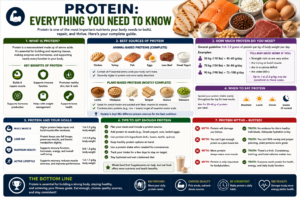
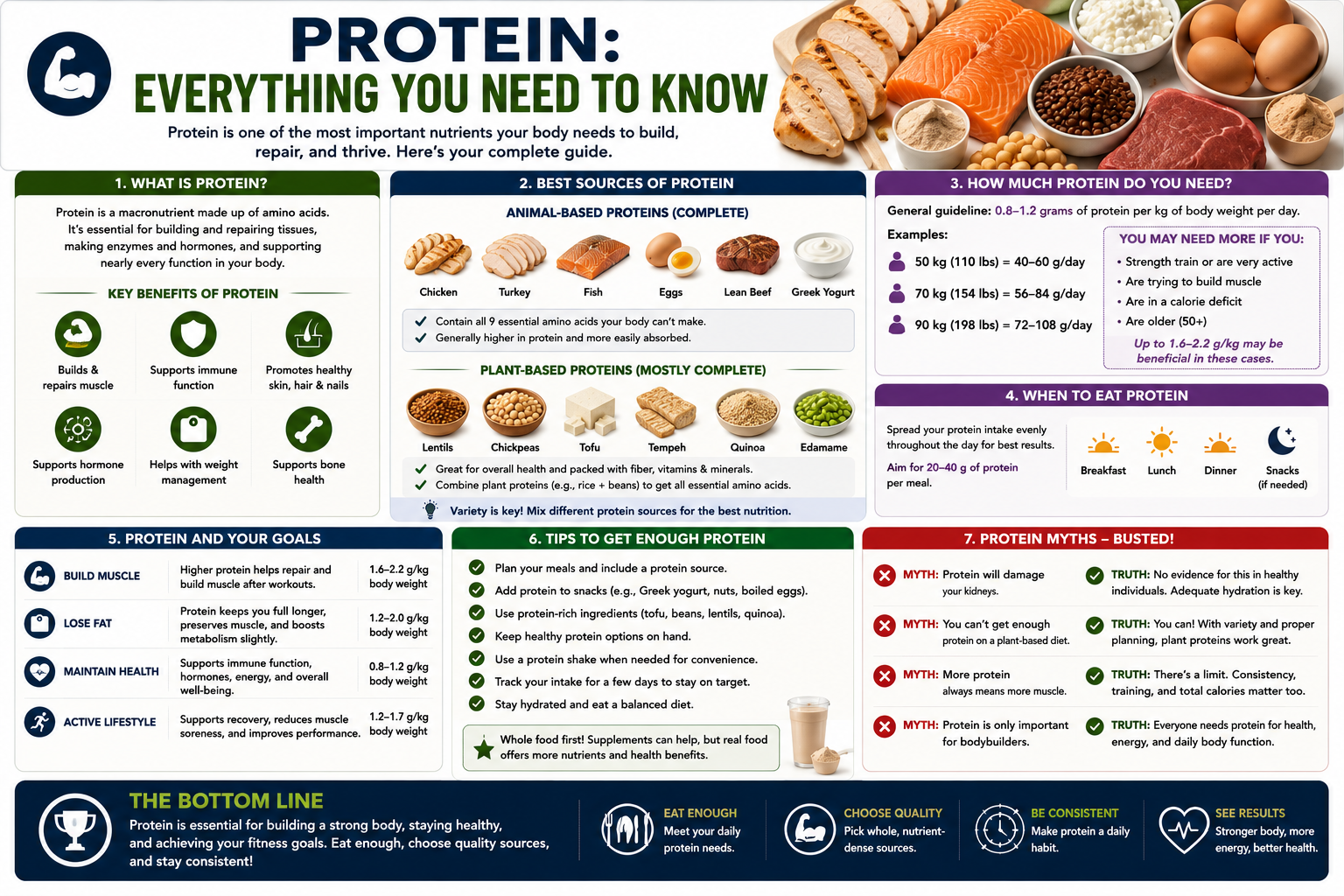
Protein nutrition infographic showing sources daily intake goals myths and tips for a healthy diet
Everything you need to know about protein in one place 

If there is one nutrient that your body genuinely cannot function without, it is protein. Not because it is trendy. Not because fitness influencers talk about it constantly. But because your body uses it for almost everything  building muscle, repairing tissue, producing hormones, powering your immune system, and even keeping your hair, skin, and nails in good shape.

And yet, most people have a very vague idea of how much protein they actually need, where the best sources are, and whether they are getting enough of it on a day-to-day basis.

This guide answers all of that in plain, simple language. No confusing science. No conflicting advice. Just a clear, practical breakdown of protein  what it does, how much you need, and how to get it right without turning every meal into a calculation.


01  What Is Protein and What Does It Actually Do?

Protein is one of the three main macronutrients your body needs in large amounts every day, alongside carbohydrates and fats. But unlike the other two, protein is not primarily used as an energy source. Its main job is structural  it is the material your body uses to build, maintain, and repair things.

Proteins are made up of smaller units called amino acids. Think of amino acids as individual building blocks, and protein as the structure made from them. Your body needs twenty different amino acids in total. Nine of these  known as essential amino acids  cannot be made by the body and must come from what you eat.

Here is a quick look at what protein is responsible for across the body:

  • Building and maintaining muscle tissue — including the heart, which is a muscle too
  • Producing enzymes that drive every chemical reaction in your body
  • Creating hormones including insulin, growth hormone, and thyroid hormones
  • Supporting immune function — antibodies are proteins
  • Transporting nutrients through the bloodstream — haemoglobin, which carries oxygen, is a protein
  • Maintaining healthy hair, skin, and nails — all made primarily from protein
  • Helping your body recover from injury, illness, and physical exertion

02  How Much Protein Do You Actually Need Each Day?

This is the question most people want answered  and the honest answer is that it depends on your body weight, your activity level, your age, and your goals.

The absolute minimum recommended for a sedentary adult is 0.8 grams of protein per kilogram of body weight per day. For a 70kg person, that works out to around 56g of protein daily. But this minimum is just that the lowest amount to prevent deficiency, not the amount needed to feel your best or support an active life.

Most nutrition researchers now suggest that the optimal range for most active adults sits considerably higher. Here is a practical guide based on who you are and what you are doing:


Who You Are Daily Protein Target
Sedentary adult (desk job, low activity) 0.8g per kg of bodyweight
Moderately active adult 1.2 – 1.4g per kg of bodyweight
Regularly active / gym-goer 1.6 – 2.0g per kg of bodyweight
Athlete or heavy trainer 2.0 – 2.4g per kg of bodyweight
Older adult (60+) 1.2 – 1.6g per kg of bodyweight
Pregnant or breastfeeding Add 25g above your usual daily target


To put that into everyday numbers: if you weigh 70kg and you are moderately active, you are likely looking at somewhere between 84g and 98g of protein per day. That is roughly three to four palm-sized servings of a protein-rich food spread across your meals.

03  The Best Food Sources of Protein

Not all protein sources are equal. What matters most nutritionally is the quality of the protein — specifically whether it contains all nine essential amino acids in useful amounts. Foods that do are called complete proteins. Those that do not are called incomplete.

Animal-based foods are generally complete proteins. Most plant-based sources are incomplete, though combining different plant foods throughout the day can cover all essential amino acids effectively.

Here is a reference guide to some of the most useful protein sources and how much protein they actually deliver:


Food Source Serving Size Protein Content Type
Chicken breast 100g cooked ~31g Animal
Eggs 2 large eggs ~12g Animal
Canned tuna 100g drained ~25g Animal
Greek yoghurt 170g serving ~17g Animal
Cottage cheese 100g ~11g Animal
Lentils 100g cooked ~9g Plant
Chickpeas 100g cooked ~9g Plant
Tofu (firm) 100g ~8g Plant
Quinoa 100g cooked ~4g Plant
Almonds 30g handful ~6g Plant


A few things worth noting from this list:

  • Eggs are often called the gold standard of protein quality because they contain all essential amino acids in near-perfect proportions for human use
  • Greek yoghurt and cottage cheese are underrated high-protein options that are easy to build into snacks and breakfast
  • For plant-based eaters, combining lentils or chickpeas with a grain like rice or quinoa across the day provides a full amino acid profile
  • Nuts and seeds contribute protein but should not be relied on as primary sources they are more useful as additions to an already protein-rich meal

04  When You Eat Protein Matters More Than You Think

Most people think about total daily protein but overlook how they distribute it across the day. And it turns out, this matters more than many people realise.

Your body can only use a certain amount of protein for muscle building and repair at any one time. Research consistently suggests that spreading protein intake across three to four meals or eating occasions  rather than front-loading or back-loading it  leads to better muscle protein synthesis throughout the day.

What this looks like in practice:

  • Aim for 20 to 40 grams of protein per main meal, depending on your daily target
  • Do not skip protein at breakfast a protein-rich morning meal reduces hunger and stabilises energy throughout the morning
  • Include protein at or around the time of physical activity if you exercise the window is wider than once thought but still relevant
  • Do not rely on one large high-protein meal at dinner to compensate for low protein earlier in the day the body does not store it the way it does fat

For people who struggle to consistently hit their protein target through food alone  particularly around busy mornings or on days when appetite is low  a high-quality protein supplement can be a practical and effective way to bridge the gap without additional meal planning.

Explore protein support options at getnaturefix.com.

05  Protein and Muscle  Not Just for Gym-Goers

When most people hear “protein for muscle,” they picture weightlifters and protein shakes. But the reality is that muscle maintenance is relevant to every single adult not just those who train.

Your muscles are your metabolic engine. They burn more energy at rest than fat tissue does, help regulate blood sugar, keep your joints stable and protected, and play a central role in physical independence as you age. Losing muscle is not just an aesthetic concern —it is a health one.

And muscle loss is happening to most adults who are not actively doing something to prevent it. From around the age of 30 onwards, the body begins to gradually lose muscle mass  a process that accelerates significantly after 50 unless it is actively countered with two things: adequate protein intake and regular physical activity.

You do not need to lift heavy weights to protect your muscle mass, though resistance exercise is the most effective tool available. Even regular walking paired with adequate daily protein can meaningfully slow age-related muscle loss compared to a sedentary, low-protein lifestyle.

✔  If you do exercise  even moderately  make sure you eat a protein-containing meal or snack within a few hours of finishing. This is when your muscles are most receptive to the amino acids they need for repair and growth.

✔  Older adults benefit particularly from leucine-rich protein sources like eggs, chicken, and dairy — leucine is the amino acid most directly involved in triggering muscle protein synthesis.

✔  Consistency matters more than precision. Hitting your protein target most days is far more valuable than occasional high-protein days with long gaps in between.

06  Protein and Weight Management  The Underrated Connection

If you have ever tried to manage your weight and found yourself hungry all the time, irritable between meals, and constantly thinking about food  there is a good chance your protein intake was too low.

Protein is the most filling macronutrient. It takes longer to digest than carbohydrates, triggers satiety hormones more effectively than fat, and reduces the kind of hunger signals that lead to mindless snacking and overeating later in the day.

There is also a metabolic advantage. Digesting protein burns more calories than digesting carbohydrates or fat  a phenomenon known as the thermic effect of food. Around 20 to 30 percent of the calories in protein are used just in the process of digesting and using it, compared to 5 to 10 percent for carbohydrates and 0 to 3 percent for fat.

What this means in practice:

  • Higher protein meals keep you fuller for longer, reducing total calorie intake without the need for strict restriction
  • Protein helps preserve muscle mass during weight loss which matters because losing muscle slows your metabolism
  • Starting the day with a high-protein breakfast measurably reduces hunger and total calorie intake throughout the day according to multiple studies
  • Swapping a high-carbohydrate snack for a protein-rich one such as Greek yoghurt, hard-boiled eggs, or a handful of nuts  reduces mid-afternoon energy crashes and food cravings

07  Signs Your Body May Need More Protein

Most protein deficiency in everyday life is not dramatic. You will not collapse or develop visible symptoms overnight. But your body will give you signals  subtle ones that most people miss or attribute to other causes.

Watch out for these signs that your daily protein intake may be falling short:

  • You feel hungry again within one to two hours of eating a main meal especially if that meal was carbohydrate-heavy with little protein
  • You are tired during the day despite adequate sleep low protein can impair energy production and neurotransmitter balance
  • Your hair is thinning, breaking more easily, or growing slowly hair is made of protein and is one of the first things affected by a shortfall
  • Your nails are weak, brittle, or slow to grow
  • You are getting ill more frequently than usual the immune system depends heavily on protein to produce antibodies
  • Recovery after exercise or physical activity feels slower than it used to
  • You are losing muscle tone or strength without a clear reason

If several of these sound familiar, increasing your daily protein intake  even modestly  is a practical first step worth trying before looking for more complicated explanations.

08  How Nature Fix Supports Your Daily Protein Goals


Getting consistent protein through food alone is entirely possible  but for many people, daily life gets in the way. Busy mornings, irregular meal times, travel, low appetite, or simply not enjoying high-protein foods can all create gaps that are hard to close through diet alone.

Nature Fix supplements are designed to work alongside a balanced diet  not replace it. Whether you need Omega-3 support for joint and muscle recovery, a calcium and vitamin D formula to protect the bone and muscle partnership, or a targeted supplement to fill specific nutritional gaps, the Nature Fix range is built around clean, honest ingredients that complement what you are already eating.

The people who feel their best long-term are those who combine consistent protein intake from real food with targeted supplementation for the nutrients their diet consistently falls short on. That combination  rather than either approach alone  is where the real difference shows up.

✔  Pair a high-protein breakfast with your daily Nature Fix supplements for a morning routine that sets your nutrition up right from the first hour of the day.

✔  On days when hitting your protein target through food feels difficult, a clean protein supplement can close the gap without adding complexity to your routine.

✔  If you exercise, prioritise protein-rich meals around your training and support recovery with the micronutrients  particularly Omega-3 and magnesium  that work alongside protein to rebuild muscle effectively.

Explore the complete Nature Fix range at getnaturefix.com and find what your daily nutrition routine is missing.


Feed your body protein it can use. Every day. That is the whole secret.

Support your daily nutrition goals with clean, effective supplements from getnaturefix.com  because what you put into your body every day is what your body becomes.
This article is for general informational purposes only and does not constitute medical advice. Please consult a qualified healthcare professional before making significant changes to your diet or supplement routine.  © 2026 Nature Fix. All rights reserved.  |  getnaturefix.com
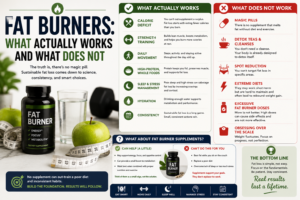
Fat Burners: What Actually Works and What Does Not

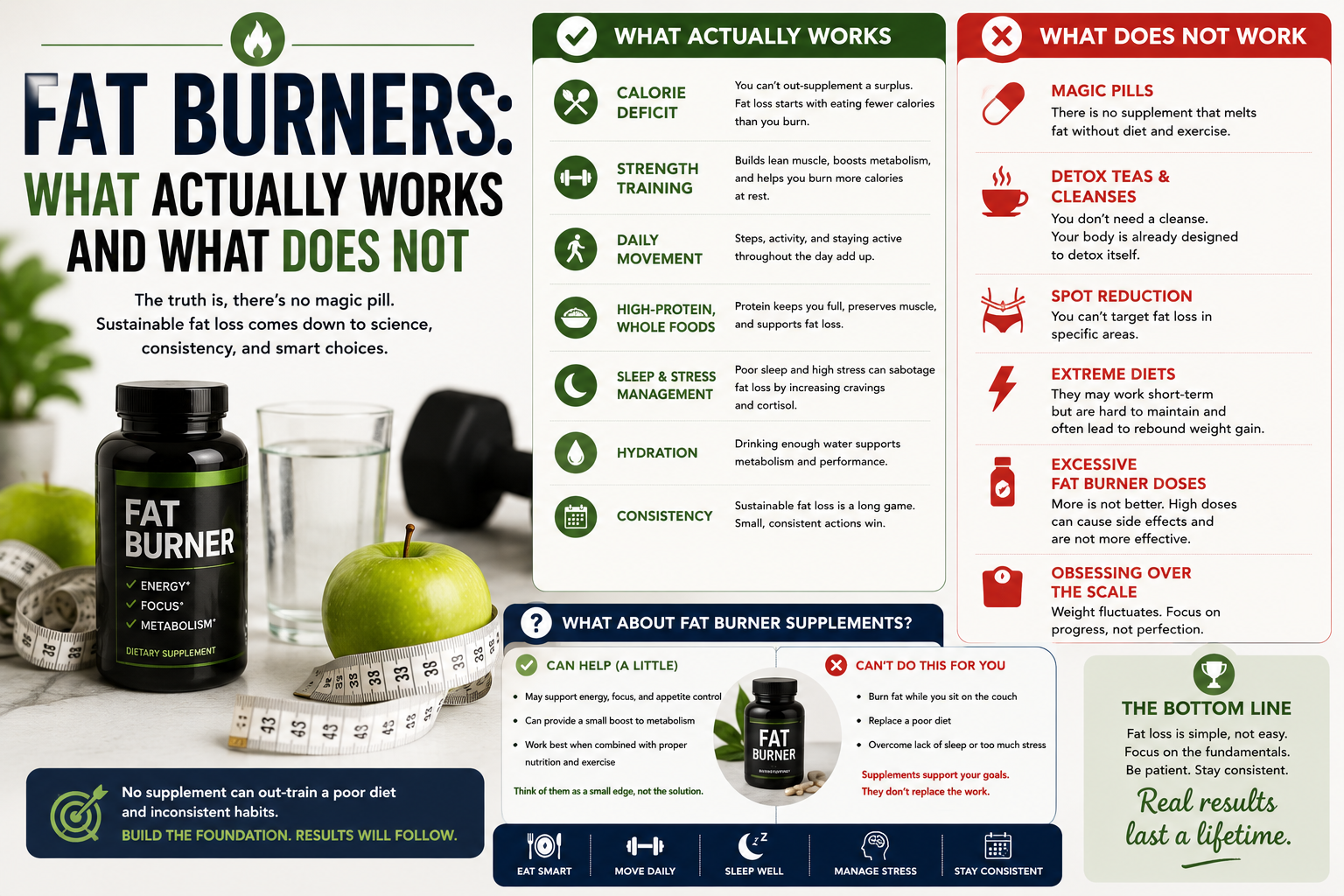
Fat Burners: What Actually Works and What Doesn't | Nature Fix
Fat burners won’t fix a broken diet.
But the right natural ingredients, paired with
the right habits, genuinely do make a difference.
We broke down what actually works and what
is just expensive marketing.

Fat Burners: What Actually Works and What Does Not

Walk into any health shop, scroll through any fitness page online, or browse any supplement website and you will be hit with fat burner products that promise dramatic results. Shredded physiques. Rapid weight loss. Belly fat gone in weeks. All from one pill taken twice a day.

The fat burner market is enormous  and unfortunately, much of it is built on exaggerated claims, misunderstood science, and marketing that works harder than the actual product does.

But here is what is also true: some natural ingredients genuinely do support fat metabolism. Some lifestyle habits reliably accelerate fat loss. And understanding how fat burning actually works in the body makes it far easier to choose what helps and avoid what wastes your time and money.

This guide gives you the honest version  no hype, no shortcuts, just clear practical information you can actually use.

01  What Is a Fat Burner  Really?

The term fat burner is a broad marketing label, not a specific scientific category. It gets applied to everything from caffeine capsules to herbal blends to thermogenic formulas, and the mechanisms behind them vary enormously.

Most products sold as fat burners work through one or more of these general pathways:

  • Thermogenesis — raising your core body temperature slightly, which increases calorie burn throughout the day
  • Appetite suppression — reducing hunger signals so you eat less without as much conscious effort
  • Energy enhancement — increasing physical and mental energy so you move more and exercise harder
  • Fat oxidation support — helping the body access and use stored fat as a fuel source more efficiently
  • Metabolism support — influencing the rate at which your body burns calories at rest

No fat burner does all of these things dramatically. And none of them work in a meaningful way if the basic foundations of fat loss are not already in place. A fat burner is a supporting tool  not a replacement for the things that actually drive fat loss.

Honest Reality:  A fat burner that is not backed by a calorie deficit, adequate protein, and regular movement is like putting premium fuel in a car that has no engine. The fuel is not the problem.

02  How Fat Loss Actually Works in Your Body

Before you can evaluate any fat burner  natural or otherwise  it helps to understand what fat loss actually is at a biological level.

Your body stores excess energy as fat in specialised cells called adipocytes. When you consume fewer calories than your body needs over a period of time, it turns to these stored fat cells for fuel. The fat is broken down through a process called lipolysis, the fatty acids are released into the bloodstream, and they are eventually converted to energy  primarily in your muscles and liver.

Three things have to happen for this process to work effectively:

  • A consistent calorie deficit  your body needs a reason to burn stored fat rather than incoming food energy
  • Hormonal conditions that favour fat release  primarily lower insulin levels, which is why what you eat matters as much as how much
  • An active metabolism that is not being suppressed by chronic under-eating, poor sleep, or extreme stress

Notice what is not on that list: a specific supplement. Fat loss is a process that the body does naturally under the right conditions. Supplements can influence how efficiently that process runs  but they cannot override the fundamental biology.

Your body is not broken. It has not forgotten how to burn fat. It just needs the right conditions  and creating those conditions is the actual job. Everything else, including supplementation, supports that job.

03  Natural Ingredients That Genuinely Support Fat Loss

Not all fat burner ingredients are created equal. Some have meaningful research behind them. Others are included at doses so low they could not realistically affect anything. And others are simply there to make the label look impressive.

Here is an honest breakdown of the ingredients most commonly found in fat burner supplements and what the evidence actually shows for each:


Ingredient What It Does Evidence Level
Green Tea Extract Raises metabolic rate and supports fat oxidation Strong
Caffeine Boosts energy, focus and thermogenic calorie burn Strong
L-Carnitine Helps transport fatty acids into cells for energy Moderate
Capsaicin Increases body temperature and short-term calorie burn Moderate
Green Coffee Bean Contains chlorogenic acid that may reduce fat absorption Moderate
Black Pepper (Piperine) Enhances absorption of other active ingredients Supporting
Chromium Supports blood sugar balance and reduces cravings Supporting
CLA May support body composition when paired with exercise Moderate


A few important points about this list:

  • Green tea extract and caffeine have the strongest evidence base and are the most commonly effective ingredients when dosed appropriately
  • L-carnitine works best in people who are already slightly deficient in it  vegetarians and older adults tend to benefit most
  • Capsaicin produces a modest thermogenic effect but requires consistency to make a meaningful contribution
  • Most of the benefit from these ingredients comes when they are paired with exercise and a healthy diet  on their own, the effects are real but small

What to Look For:  When evaluating a fat burner supplement, check the actual dose of each active ingredient  not just whether it is listed. An ingredient that appears on a label at an ineffective micro-dose is essentially decorative.

View the Nature Fix supplement range at getnaturefix.com for transparent, properly dosed formulas with no misleading proprietary blends.


04  Fat Burner Myths That Need to Stop

The fat burner industry runs on myths. Here are the most common ones  and what is actually true:

✘  MYTH: “This pill will burn fat while I sleep without changing anything else.”

✔  TRUTH: No supplement creates fat loss independently. A calorie surplus with a fat burner still results in fat gain. Full stop.

✘  MYTH: “You can target belly fat specifically with the right supplement.”

✔  TRUTH: Spot reduction is physiologically impossible. Your body decides where fat is lost based on genetics and hormones  not which cream you apply or pill you take.

✘  MYTH: “Sweating more means burning more fat.”

✔  TRUTH: Sweat is your body cooling itself. It reflects heat, not fat loss. You can sweat heavily in a sauna and lose no body fat whatsoever.

✘  MYTH: “Natural means safe in any dose.”

✔  TRUTH: Natural ingredients can have real effects on heart rate, blood pressure, and sleep. High doses of stimulant-based fat burners carry genuine risks, especially for people with cardiovascular concerns.

✘  MYTH: “A fat burner will fix a bad diet.”

✔  TRUTH: No thermogenic supplement can compensate for a diet consistently high in ultra-processed foods and excess calories. Nutrition always outweighs supplementation in fat loss.

✘  MYTH: “The more expensive the product, the better it works.”

✔  TRUTH: Price in the supplement industry reflects marketing spend as much as ingredient quality. Some of the most effective fat-supporting ingredients  green tea, caffeine, protein  are also the most affordable.

The most powerful fat burner available is a combination of a moderate calorie deficit, high protein intake, regular physical activity, good sleep, and managed stress levels. Every other tool works within that framework  not instead of it.


05  Your Diet Is the Real Fat Burner

No supplement category generates more revenue than fat burners. And no single lifestyle factor has more impact on fat loss than what you eat consistently every day. These two facts are directly connected  if food worked as well as the marketing promised, the supplements would not sell.

The nutritional foundations of effective fat loss are straightforward, even if they take effort and consistency to put into practice:

Create a Calorie Deficit – Gradually

Fat loss requires consuming fewer calories than your body expends. A deficit of 300 to 500 calories per day is sustainable and does not trigger the metabolic slowdown that comes with aggressive restriction. Crash diets burn muscle as much as fat and almost always result in weight regain.

Eat More Protein Than You Think You Need

Protein is the most fat-loss-friendly macronutrient available. It keeps you full for longer, protects muscle mass during a calorie deficit, and burns more calories during digestion than carbohydrates or fat. Most people trying to lose fat eat too little protein and too many refined carbohydrates.

Reduce Ultra-Processed Foods – Not Food Groups

You do not need to eliminate carbohydrates, fat, or any specific food group to lose body fat. What you do need to reduce is the frequency of ultra-processed, high-calorie, low-nutrient foods that make it difficult to stay within a calorie range without constant hunger.

Eat Regularly and Do Not Skip Meals

Skipping meals in an attempt to reduce calories often backfires. It increases hunger later in the day, makes poor food choices more likely, and can slow the metabolic rate over time. Three balanced meals with adequate protein each is a more effective strategy than erratic eating with large gaps.

✔  Fill half your plate with vegetables and lean protein at every main meal. This naturally reduces overall calorie intake without requiring precise tracking.

✔  Drink water before meals  genuine hunger and thirst are easy to confuse, and staying hydrated reduces unnecessary calorie intake throughout the day.

✔  Cook at home as often as practically possible  restaurant and takeaway meals consistently contain far more calories than home-cooked equivalents.

06  The Right Types of Exercise for Fat Loss

Exercise accelerates fat loss significantly  but the type of exercise matters, and more is not always better. The right combination protects your muscle while burning fat, rather than burning through both indiscriminately.
Resistance Training Comes First
Weightlifting, bodyweight exercises, resistance bands  anything that challenges your muscles to work against load. Resistance training builds and preserves the muscle tissue that is your metabolic engine. More muscle means more calories burned at rest, every hour of every day. During a calorie deficit, resistance training is what prevents your body from simply shrinking rather than genuinely leaning out.
Cardio Adds to the Deficit
Cardiovascular exercise  running, cycling, swimming, rowing  increases the number of calories your body burns per day, widening the calorie deficit and therefore accelerating fat loss. It also improves cardiovascular health, mood, and endurance. However, doing large amounts of cardio without resistance training often leads to muscle loss alongside fat loss  which reduces metabolic rate over time.
Walking Is Genuinely Underrated
Daily walking is one of the most underappreciated fat loss tools available. It burns calories, reduces stress hormones that contribute to fat storage, improves insulin sensitivity, and has a very low injury risk. Aiming for 7,000 to 10,000 steps per day as a baseline  in addition to structured exercise  creates a meaningful additional calorie burn over weeks and months.

The best exercise routine for fat loss is the one you will actually stick to. Three moderate sessions per week done consistently for six months will always outperform an aggressive programme abandoned after three weeks.

What Actually Drives Fat Loss  Ranked by Impact

To bring everything together, here is a practical reference showing the real drivers of fat loss and how each one contributes:

What You Control How It Affects Fat Loss Impact
Calorie deficit The non-negotiable foundation of all fat loss Very High
Protein intake Preserves muscle and keeps you full longer Very High
Sleep quality Regulates hunger hormones leptin and ghrelin High
Strength training Builds muscle that burns more calories at rest High
Cardio & walking Increases daily calorie expenditure Moderate
Stress management Lowers cortisol which drives belly fat storage Moderate
Natural supplements Supports metabolism and fills nutritional gaps Supporting

Supplements sit at the bottom of this table  not because they are useless, but because they are a multiplier on the things above them. Get the foundations right, and supplementation genuinely adds to your results. Skip the foundations and no supplement can compensate.
07  How Nature Fix Supports Your Fat Loss Goals
Nature Fix does not make inflated fat-burning claims. What the range does offer is clean, transparent, properly formulated supplementation designed to support the foundations that make real fat loss possible.

Here is how specific Nature Fix products complement a serious fat loss approach:

  • Omega-3 Fish Oil 1650mg — EPA and DHA support healthy inflammation levels, improve insulin sensitivity, and play a role in how efficiently the body metabolises fat. People with higher Omega-3 status consistently show better fat oxidation outcomes during exercise.
  • Vitamin D3 with K2 — Vitamin D deficiency is closely associated with difficulty losing body fat and poor metabolic function. Maintaining optimal D3 levels supports the hormonal environment that favours fat loss and muscle preservation.
  • Magnesium — Chronic magnesium deficiency impairs sleep quality and raises cortisol two factors directly linked to increased belly fat storage and reduced fat oxidation. Correcting magnesium status supports better sleep, lower stress hormones, and improved energy production.
  • B-Complex Vitamins — The B vitamin group is essential for energy metabolism. When B vitamins are in short supply, your body cannot efficiently convert food and stored fat into usable energy leaving you feeling tired and making exercise feel harder than it should.

None of these are marketed as fat burners. But each of them addresses a genuine nutritional gap that, when closed, makes every other fat loss effort more effective.

Explore the full Nature Fix range at getnaturefix.com  clean, honest supplements built to support real results.

Real fat loss takes real effort  but it is entirely within your reach.

Support your fat loss journey with clean, science-backed nutrition from getnaturefix.com  because results that last always start with the right foundation.
This article is for general informational purposes only and does not constitute medical advice.
Please consult a qualified healthcare professional before beginning any new supplement or weight loss programme, particularly if you have an existing health condition. 
© 2026 Nature Fix. All rights reserved.  |  getnaturefix.com
The Link Between Omega-3 and Healthy Aging

Getting older is something none of us can avoid. But how we age  how we feel, how well our bodies work, and how sharp our minds stay  is something we have far more control over than most people realise.

One of the most well-researched tools for aging well is also one of the simplest: Omega-3 fatty acids. Found naturally in oily fish, these essential fats do things inside your body that no other nutrient quite replicates. And yet most people are not getting nearly enough of them.

In this guide, we are going to walk you through what Omega-3 actually does as you age, why it matters more the older you get, and how to make sure your body is never running short of it.

What Happens to Your Body as You Get Older?

Aging is a gradual process. Most of the changes it brings happen slowly, quietly, and without obvious warning signs until they become noticeable problems. Some of the most common age-related changes include:

  • The heart and arteries gradually become less flexible, making cardiovascular events more likely
  • The brain starts to process information more slowly and memory becomes harder to hold onto
  • Joints lose the cushioning that keeps movement smooth and pain-free
  • Skin thins, dries out, and loses the elasticity that keeps it firm and smooth
  • The immune system becomes less reliable at managing inflammation throughout the body

These changes are not inevitable in the way most people think. They are largely driven by inflammation — a slow, persistent internal process that accelerates when the body lacks the right nutrients to control it.

Key Insight:  Chronic low-grade inflammation is widely considered one of the primary drivers of age-related decline. Omega-3 fatty acids are among the most effective natural compounds for managing it.

Omega-3 and Your Heart  The Connection That Matters Most

Heart disease remains one of the leading health concerns for aging adults worldwide. As the years pass, the cardiovascular system works harder, arteries gradually stiffen, and maintaining healthy cholesterol and blood pressure becomes more challenging.

This is where EPA  one of the two primary Omega-3 fatty acids found in fish oil  plays a significant role. EPA supports the flexibility of arterial walls, helps maintain a healthy ratio of good to bad cholesterol, and reduces the kind of inflammation that puts unnecessary strain on the heart over time.

Studies consistently show that people who maintain adequate Omega-3 intake have measurably better cardiovascular outcomes as they age. It is not a dramatic overnight change  it is the result of consistent daily support given to a system that works around the clock.

“Supportive but not conclusive research shows that consumption of EPA and DHA Omega-3 fatty acids may reduce the risk of coronary heart disease. Taking one Nature Fix Omega-3 softgel daily is one of the simplest steps you can take for your heart.”

To learn more about heart-supporting nutrition, visit Nature Fix at getnaturefix.com.

Keeping Your Brain Sharp – The Role of DHA

DHA is the most abundant fatty acid in the human brain. It makes up a significant portion of the grey matter that handles thinking, memory, and decision-making. When DHA levels in the brain are adequate, neurons communicate efficiently, mental tasks feel less demanding, and cognitive performance holds steadier over time.

When DHA is in short supply, the opposite happens. Research links chronically low DHA levels to faster cognitive decline, reduced memory performance, and increased risk of age-related brain conditions.

The challenge is that the brain cannot manufacture DHA on its own. It depends entirely on what you eat and supplement. As people age and dietary habits shift, DHA intake tends to drop exactly at the time the brain needs it most.

Did You Know?  The average adult brain is roughly 60% fat by dry weight. DHA accounts for a large proportion of that fat, making consistent Omega-3 intake one of the most direct investments you can make in long-term brain health.

Supporting your brain with daily DHA does not mean your memory will become perfect or that cognitive aging will stop entirely. What it means is that you are giving your brain the building blocks it needs to function as well as possible for as long as possible.


Stiff Joints and Aching Muscles – How Omega-3 Helps

If you have ever woken up feeling stiff, needed a few minutes before your knees felt ready to walk properly, or noticed that recovery after physical activity takes longer than it used to  you are experiencing something millions of aging adults deal with every day.

Much of this comes down to inflammation in and around the joints. As we get older, the cartilage that cushions our joints naturally thins, and the body is less efficient at managing the inflammatory signals that follow. The result is discomfort, reduced range of motion, and a gradual reluctance to stay active.

EPA and DHA work at a cellular level to moderate the production of inflammatory compounds. Multiple large-scale studies have found that consistent Omega-3 supplementation leads to meaningful reductions in joint stiffness and discomfort, particularly in people who have been experiencing age-related joint issues for some time.

✔  Most people notice a gradual improvement in joint comfort after six to eight weeks of daily Omega-3 supplementation. The benefits compound over time  the longer you take it, the more consistent the relief.

Explore the full Nature Fix Omega-3 1650mg formula at getnaturefix.com and see how it fits into your daily wellness routine.

Aging Skin — Why Omega-3 Is Your Skin’s Best Friend

The skin is the body’s largest organ and one of the most visible signs of how well we are aging. As we get older, the natural production of oils that keep skin hydrated and supple slows down. The result is dryness, the appearance of fine lines, and a loss of that smooth, even tone most of us associate with youth.

What most people do not realise is that a significant part of how your skin ages is determined not just by what you put on it, but by what you put into your body. EPA and DHA play a central role in maintaining the skin’s lipid barrier  the natural layer that holds moisture in and keeps irritants out.

When Omega-3 intake is adequate, the skin is better able to retain moisture, recover from environmental damage, and maintain a more even appearance. When it is low, skin tends to become dry, reactive, and visibly less vibrant over time.

Simple Truth:  No skincare product can fully compensate for what your skin is missing on the inside. Consistent Omega-3 intake is one of the most evidence-backed inside-out approaches to maintaining skin health as you age.


Omega-3 and Aging — At a Glance

Here is a quick summary of how Omega-3 supports the body systems most affected by the aging process:


Body System How Omega-3 Helps With Aging
Heart & Arteries Supports healthy cholesterol and blood pressure levels
Brain & Memory DHA slows cognitive decline and supports focus
Joints & Mobility EPA reduces inflammatory markers causing stiffness
Skin & Appearance Preserves moisture barrier and reduces fine lines
Eyes & Vision DHA is essential for retinal cell structure and function
Immune System Omega-3 modulates immune response and reduces chronic inflammation

Where Does Omega-3 Come From? Natural Food Sources

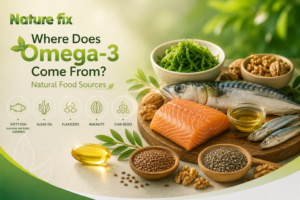
The human body cannot produce EPA or DHA on its own. Every milligram your body uses has to come from outside either from the food you eat or a supplement you take. The richest natural sources of Omega-3 are:

  • Salmon — one of the highest sources of EPA and DHA per serving, ideally eaten two to three times a week
  • Sardines — small but nutritionally dense, with excellent Omega-3 content and widely available
  • Mackerel — a flavourful oily fish that delivers significant EPA and DHA alongside other key nutrients
  • Herring — often overlooked but rich in Omega-3 and easy to include in a varied diet
  • Walnuts the best plant-based source of Omega-3, though they contain ALA rather than EPA and DHA directly
  • Flaxseed and chia seeds useful additions but again in ALA form, which the body converts to EPA and DHA only in small amounts

The practical reality is that most people do not eat enough oily fish to consistently meet their EPA and DHA needs. Recommended intake for adults is at least 500mg of combined EPA and DHA per day. The average daily dietary intake sits around 86mg  less than one fifth of what is recommended.

Important Distinction:  Plant-based ALA (found in flaxseed and walnuts) is not the same as EPA and DHA. The body converts very little ALA into usable EPA and DHA. For meaningful Omega-3 benefits, fish oil or marine-sourced supplementation is the most reliable approach.


How Much Omega-3 Do You Need as You Age?

General nutrition guidelines suggest a minimum of 250mg to 500mg of combined EPA and DHA per day for healthy adults. For older adults specifically, or those managing cardiovascular, joint, or cognitive concerns, many health practitioners recommend higher daily intakes  often in the range of 1,000mg or more.

Nature Fix Omega-3 Fish Oil 1650mg delivers exactly that 1000mg of active Omega-3 per softgel, combining EPA 600mg and DHA 400mg in a single easy daily capsule. There is no complicated dosing, no multiple tablets, and no guesswork.

✔  Take one softgel daily with your main meal. The fat content in food helps your body absorb the Omega-3 more efficiently.

✔  Take it at a consistent time each day. The benefits of Omega-3 are cumulative  regularity matters more than anything else.

✔  Give it at least eight weeks. Meaningful changes in joint comfort, skin condition, and mental clarity take time to become noticeable.

✔  Pair it with a balanced diet. Omega-3 works best as part of a wider approach to nutrition, not as a standalone fix.

Ready to get started? Visit getnaturefix.com to order Nature Fix Omega-3 Fish Oil 1650mg  from $25.00 with a Subscribe and Save option available.


Why Nature Fix Omega-3 Is Built for Healthy Aging

Not all fish oil supplements are created equal. The Omega-3 market is full of products with misleading labels, low active fatty acid content, and poor-quality fish oil that has not been properly purified.

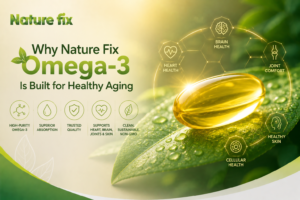
Nature Fix Omega-3 Fish Oil 1650mg is different in the ways that actually matter:

  • Triple-strength formula — 1650mg fish oil with 1000mg active Omega-3 per single softgel
  • Wild-caught ocean fish — not farmed, not low-grade fish meal
  • Rigorously purified — processed to remove heavy metals and environmental contaminants
  • Clean ingredients — no artificial colours, flavours, fillers, gluten, or soy
  • Softgel delivery — optimised for absorption at the right stage of digestion
  • Honest labelling — what you see on the label is exactly what is in the capsule

Whether you are in your forties and thinking ahead, or in your sixties and already feeling the effects of aging on your joints, heart, or mental clarity  Nature Fix Omega-3 is built to support your body through every stage.

Browse the complete Nature Fix supplement range at getnaturefix.com and find the right products for your daily wellness routine.

Final Thoughts

Healthy aging does not happen by accident. It is the result of small, consistent daily choices that add up over months and years. Omega-3 is one of those choices  quiet, simple, and backed by decades of research.

Your heart works for you every single hour of every single day. Your brain handles everything you think, feel, and experience. Your joints carry you through life. Your skin faces the world on your behalf. Each of these deserves to be supported.

One softgel a day. One less thing to worry about. A whole lot of long-term difference.

Start today at getnaturefix.com  because the best time to support your body is always right now.

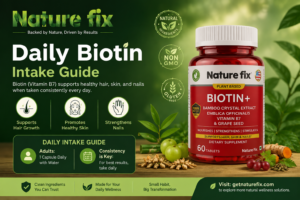
Daily Biotin Intake Guide: How Much Do You Actually Need?

You have probably seen biotin mentioned on shampoo bottles, hair growth supplements, and beauty product labels more times than you can count. But what actually is biotin, how much of it does your body need each day, and does taking more of it really make a difference?

This guide breaks it all down in plain, honest language — no medical jargon, no confusing numbers, just clear answers you can actually use.


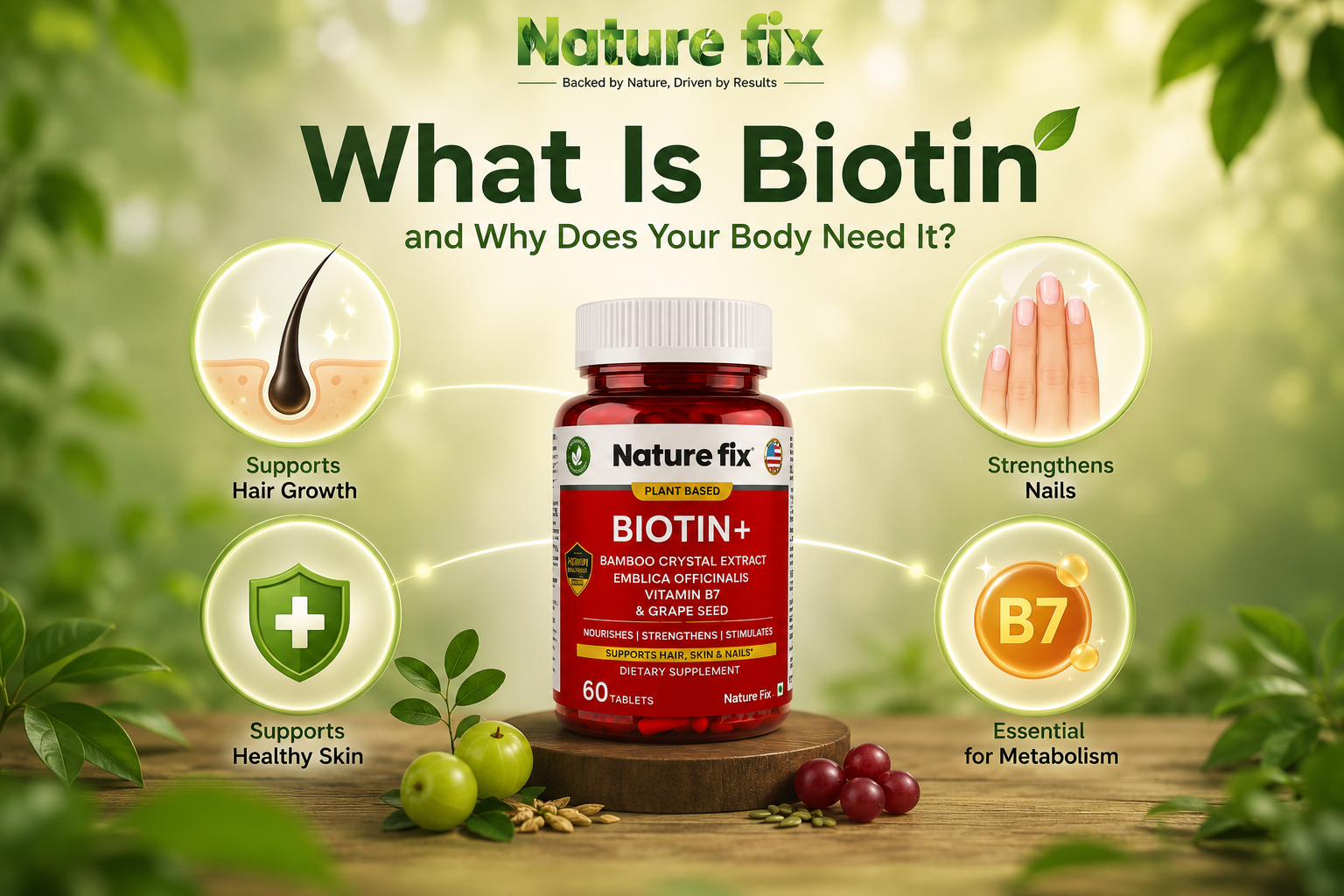
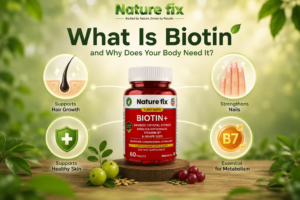
What Is Biotin and Why Does Your Body Need It?

Biotin is a water-soluble vitamin that belongs to the B vitamin family. It goes by several names Vitamin B7, Vitamin H — but its job inside your body stays the same regardless of what you call it.

Your body uses biotin every single day to convert the food you eat into usable energy. It helps process carbohydrates, break down fats, and metabolise protein — three things your body does constantly, around the clock.

Beyond energy, biotin plays a quieter but equally important role in keeping your hair growing, your nails strong, and your skin balanced. It also supports healthy nerve function and helps your liver do its job more effectively.

Key Point: Because biotin is water-soluble, your body cannot store it. Whatever is not used gets flushed out — meaning your body depends on a fresh daily supply, either from food or supplementation.

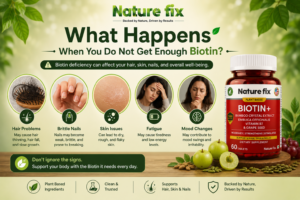
What Happens When You Do Not Get Enough Biotin?

Biotin deficiency is not extremely common, but it is more widespread than many people think — particularly among those with restrictive diets, digestive issues, or certain lifestyle habits.

When your biotin levels drop below what your body needs, the signs tend to show up gradually rather than all at once. Some of the most frequently reported symptoms include:

  • Hair that starts thinning or shedding more than usual
  • Brittle nails that break or chip without much force
  • Dry, flaky, or irritated skin — particularly around the face
  • A persistent sense of tiredness that does not improve with rest
  • Mild mood changes or difficulty concentrating
  • Tingling or numbness in the hands and feet

If you have been noticing any combination of these and cannot link them to another obvious cause, your biotin intake may be worth looking at.


How Much Biotin Do You Need Each Day?

This is the question most people come looking for, and the honest answer is  it depends on your age, your lifestyle, and what you are trying to achieve. Here is a straightforward breakdown:


Age Group Daily Biotin Requirement
Infants (0–12 months) 5–6 mcg per day
Children (1–8 years) 8–12 mcg per day
Older children (9–13 years) 20 mcg per day
Teenagers (14–18 years) 25 mcg per day
Adults (19 years and above) 30 mcg per day
Pregnant women 30 mcg per day
Breastfeeding women 35 mcg per day


These figures represent the adequate intake levels established by nutrition authorities  the amount considered sufficient to meet the needs of most healthy people under normal circumstances.

Note: If you are dealing with noticeable hair thinning, brittle nails, or other signs of deficiency, many healthcare practitioners suggest higher supplemental doses  typically ranging from 1,000 mcg to 10,000 mcg daily  under proper guidance.


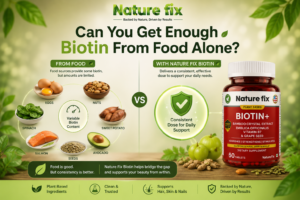
Can You Get Enough Biotin From Food Alone?

In an ideal world, a balanced diet would cover your daily biotin needs without any supplementation required. And for some people, it genuinely does. But for many others, food alone falls short  either because their diet is limited, their gut does not absorb nutrients efficiently, or their daily requirements are simply higher than average.

The richest food sources of biotin include:

  • Eggs cooked eggs are one of the best natural sources. Raw egg whites contain avidin, a protein that blocks biotin absorption, so always cook your eggs.
  • Organ meats liver and kidney are exceptionally high in biotin, though not a regular part of most diets.
  • Nuts and seeds almonds, sunflower seeds, and peanuts all contain meaningful amounts of biotin.
  • Salmon and tuna fatty fish provide a reasonable amount of biotin alongside their Omega-3 content.
  • Sweet potatoes one of the better plant-based sources of biotin, along with being rich in other nutrients.
  • Dairy products milk, cheese, and yoghurt contribute small but consistent amounts of biotin daily.

The challenge is that biotin content in food can vary considerably depending on how the food is grown, stored, and prepared. Cooking and processing often reduce the amount of biotin available for your body to absorb.


Who Is Most Likely to Need a Biotin Supplement?

While biotin deficiency can affect anyone, certain groups of people are more vulnerable than others.

Alcohol consumers: Alcohol interferes with the way your body absorbs and uses biotin, lowering effective levels even when dietary intake appears adequate.

Pregnant women: The body’s demand for biotin increases during pregnancy. Research suggests that a significant proportion of pregnant women develop mildly low biotin levels even without obvious symptoms.

Long-term medication users: Some anticonvulsant drugs and long-term antibiotic use can deplete biotin over time by disrupting gut bacteria that contribute to biotin production.

Those with digestive conditions: Conditions that affect nutrient absorption in the gut, such as Crohn’s disease or colitis, can reduce how much biotin the body successfully takes in from food.

Restrictive dieters: Anyone significantly limiting their food variety or overall intake runs the risk of falling short on biotin along with other essential nutrients.

Does Taking More Biotin Actually Work?

This is a fair and important question. The honest answer is  for people who are genuinely deficient, increasing biotin intake consistently delivers noticeable improvements, particularly in hair thickness, nail strength, and skin condition.

For people who already have adequate biotin levels, the benefits of high-dose supplementation are less dramatic but still meaningful  particularly for those under physical or nutritional stress.

What biotin is not is a miracle ingredient. It works best when it is part of a thoughtful daily routine that includes proper nutrition, adequate hydration, and consistent sleep. Think of it as giving your body one important resource it needs to do what it is already trying to do  grow healthy hair, maintain strong nails, and keep your skin in balance.

Patience is key: Most people who begin taking biotin consistently report visible improvements after eight to twelve weeks of uninterrupted use. Do not judge the results too early.

How Nature Fix Biotin Supports Your Daily Needs

Nature Fix Biotin is formulated for adults who want a clean, reliable daily source of this essential vitamin  without unnecessary additives, artificial fillers, or ingredients they cannot pronounce.

Each tablet delivers a carefully considered dose of biotin designed to bridge the gap between what your diet provides and what your body actually needs. The formula is straightforward, the ingredients are transparent, and the intention is simple  to give your body the consistent nutritional support it deserves every single day.

Whether you are dealing with noticeable hair thinning, frustratingly weak nails, or simply want to maintain the health you already have, Nature Fix Biotin fits into your routine without complication.


Simple Tips to Get the Most From Your Daily Biotin

✓  Take it at the same time every day — consistency matters more than timing, but a fixed moment helps you stay on track without thinking about it.

✓  Take it with food — while biotin does not require food to absorb, pairing it with a meal makes it easier to remember and gentler on an empty stomach.

✓  Be patient — give it at least eight weeks before drawing conclusions. Biological changes in hair and nails take time to become visible because of the natural growth cycle.

✓  Stay hydrated — since biotin is water-soluble, keeping your fluid intake up supports healthy circulation and nutrient delivery throughout the body.

✓  Avoid raw egg whites — if eggs are a regular part of your diet, always cook them to prevent the avidin in raw egg white from competing with biotin absorption.


Final Thoughts

Biotin is not complicated. It is a vitamin your body uses every day, cannot store, and consistently needs in adequate supply. Most people go about their daily lives slightly below where they should be — not dramatically deficient, but not optimally nourished either.

Understanding your daily biotin requirement is the first step. Meeting it consistently, through a combination of good food choices and reliable supplementation, is what actually makes the difference over time.

Nature Fix exists to make that part simple.


This article is for general informational purposes only and does not constitute medical advice. Consult a qualified healthcare professional before beginning any supplement regimen, particularly if you are pregnant, breastfeeding, or managing a health condition.  © 2026 Nature Fix. All rights reserved.

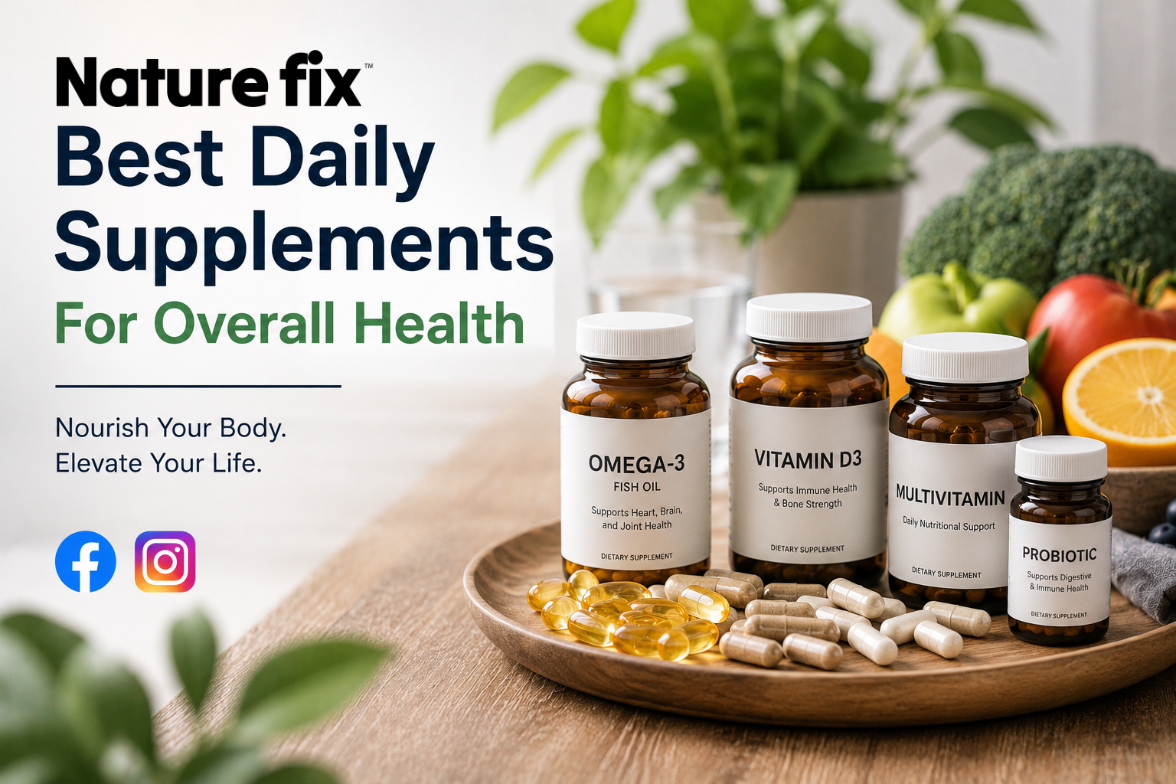
Best Daily Supplements for Overall Health

Imagine your body as a garden. You can water it regularly, give it sunlight, pull the weeds — but if the soil is missing key minerals, nothing will grow the way it should. Supplements, if chosen wisely, are that missing soil enrichment.

We are living in an age of nutritional paradox. Grocery shelves are overflowing, calorie counts are higher than ever, and yet millions of people are quietly deficient in the very nutrients their bodies need to function. Long hours, processed food, chronic stress, and less time spent outdoors have created a modern nutritional gap that whole foods alone often can’t fill. 

That’s where the clean daily supplements and no fillers come. Not as a substitute for healthy living but as an extra layer of considered, targeted support. This guide explores the most evidence-supported supplements for general wellness – what they are, why they matter, and how to think about adding them to your daily routine. 

The core group: daily supplements to consider

Vitamin D3: The sunshine vitamin you probably aren’t getting enough of

If there is one supplement that almost every health professional agrees upon, it is vitamin D3. It regulates calcium absorption, supports immune function, affects mood through serotonin pathways, and is involved in hundreds of biochemical processes. The problem? More than 40% of adults everywhere are deficient — mostly because we spend so much time indoors. If you’re not getting enough daily sun exposure (and most of us aren’t), a daily dose of 1,000 to 2,000 IU is a good place to start. Pair with K2 (more on this below) to ensure calcium is going into your bones and not your arteries. 

Omega-3 fatty acids:  The anti-inflammatory essential your brain loves

Found in fatty fish, flaxseed, and walnuts, omega-3s (particularly EPA and DHA) are among the most researched supplements in the world. Their benefits span heart health, brain function, joint comfort, and inflammation management. The modern diet is notoriously high in omega-6 fatty acids (from vegetable oils and processed foods), which creates an imbalance that promotes inflammation. Look for a high-quality fish oil or algae-based omega-3 with at least 500mg of combined EPA and DHA per serving.

Magnesium: The Mineral That Works 300 Jobs and Doesn’t Get Credit

Magnesium acts as a co-factor in more than 300 enzymatic reactions, including energy production, protein synthesis, blood sugar control, and nerve transmission. But soils are depleted, so modern crops contain far less magnesium than they used to, making dietary insufficiency surprisingly common. Low magnesium is linked to poor sleep, muscle cramps, headaches, anxiety and fatigue. The form matters: Magnesium glycinate and magnesium malate are very bioavailable and easy on the stomach. Many people find that taking magnesium at night makes a big difference to the quality of their sleep. 

Vitamin K2: The silent partner that keeps things in their place

K2 is one of those under-appreciated nutrients that doesn’t usually get its own headline, but works behind the scenes. Its main job is to direct calcium, ensuring it goes into bones and teeth rather than depositing in arteries. This is especially true if you are taking vitamin D3 and calcium as supplements. K2 is also good for your heart and bone density. Preferably MK-7 (menaquinone-7, derived from fermented foods such as natto) because of its longer half-life. A standard dose of 90–180 mcg per day with D3 is a well-known combination. 

Vitamin C:  The classic antioxidant that does what it should

Vitamin C isn’t just for the cold season. It’s a powerful antioxidant that helps neutralise free radicals, aids in collagen production (great for skin and joints), helps with the absorption of iron, and supports the immune system. Most animals can make their own vitamin C, but humans can’t — we have to get it from our food or supplements. Severe deficiency ( scurvy ) is rare today , but suboptimal levels are common , especially among people under chronic stress ( the adrenal glands burn through vitamin C at a rapid rate ) . A common dose is 500–1,000 mg per day. Most people tolerate this well. 

B-complex vitamins: The body’s machinery for energy and mood

B vitamins are a group of water-soluble nutrients — B1, B2, B3, B5, B6, B7, B9 and B12 — that have important roles in energy metabolism, red blood cell production, DNA synthesis and neurotransmitter function. B12 is one that people who eat few or no animal products worry about since it’s found almost exclusively in animal-derived foods. B9 (folate) is important for pregnancy and cell division. You’re covered all around with a quality B-complex supplement. B vitamins often work synergistically, meaning they are more effective together than they are on their own. 

The gut brain connection in a capsule: Probiotics

The gut microbiome is one of the most researched areas in health science today, and for good reason. The trillions of microbes that live in your intestines influence digestion, immunity, mood, inflammation, and even cognition. Antibiotics, stress and a diet low in fibre are some of the things that can upset this delicate ecosystem. A multi-strain probiotic supplement helps restore beneficial bacteria, especially strains of Lactobacillus and Bifidobacterium. Look for a product with multiple strains and at least 10 billion CFUs . The effect is even stronger if you take probiotics with foods high in prebiotics (onions, garlic, asparagus). 

Zinc: The Immune System and Hormone Health’s Unsung Hero

Zinc is needed for immune cells to develop, for wounds to heal, for testosterone production, for taste and smell, and for DNA synthesis. It is also a strong antioxidant in its own right. Zinc deficiency is associated with frequent sickness, slow wound healing, thinning hair and low libido. Many people, including vegetarians, athletes and older adults, do not get enough, even though it is found in meat, shellfish and legumes. Two of the most bioavailable forms of zinc are zinc picolinate and zinc bisglycinate. Zinc and copper compete for absorption so long term zinc supplementation should ideally be balanced with a small amount of copper. 

A practical hint

You don’t have to start with all of them at once. Start with 2-3 that address your biggest concerns, give your body 4-6 weeks to adjust and notice changes, and then gradually layer in others. Quality is everything. Look for reputable brands that offer third-party testing and transparency about ingredient sourcing. 

Smart Ways to Build Your Supplement Routine

The supplement industry is inundating — and, frankly, it’s meant to be that way. There’s a lot of flashy marketing and aggressive claims, and as the shelf of options grows, it’s easy to spend too much money on things you don’t need—or worse, to overlook the basics that would actually help.

A 30-year-old athlete living in a sunny climate will require very different things to a 55-year-old desk worker living in a northern city. Where they can be done, blood tests are a godsend – they remove all the guesswork. At the very least, it can tell you where you’re starting from and if you need to supplement by checking vitamin D, B12, magnesium and ferritin (iron storage) levels. 

Timing is also crucial. Dietary fat helps in the absorption of fat-soluble vitamins like D, K and omega-3s. Magnesium is often better tolerated in the evening. Taking probiotics on an empty stomach in the morning or with food depends on the strain. As B vitamins tend to provide a boost of energy, taking them earlier in the day may help you prevent sleep problems.

And remember, more is not always good. For example, higher doses of fat-soluble vitamins can accumulate in tissue and cause toxicity with time. Do not exceed established safe upper limits unless you are working with a health care professional who has reviewed your individual situation. 

First, let’s talk about whole foods.

Supplements are just what their name says they are: extra. They work best layered on top of a solid dietary foundation—not as a substitute for consistently poor eating. A colourful, varied diet of vegetables, whole grains, quality proteins, healthy fats, and fermented foods provides a matrix of nutrients, fibre, and phytochemicals that no pill can fully replicate.

Think of these supplements as plugging the holes – the D3 you can’t get from a desk job, the omega-3s missing from a meal plan light on fish, the magnesium stripped by food processing. That’s when the combo really shines, when food does the heavy lifting and supplements do the edges. 


Keep it in mind

Some supplements interact with medications. For example, vitamin K2 can interfere with blood thinners, and high-dose fish oil can increase bleeding risk. Always check with your doctor if you are on prescription medication or managing a chronic condition before adding new supplements to your routine.

Bringing it all together

Wellness is not a place you arrive at from having purchased the right things. It’s the sum of small choices made day-to-day — what you eat, how you move, how well you sleep, how you deal with stress. Bioavailable powder supplements fit into that picture as a smart, targeted tool. Used sparingly, they can help to fill nutritional gaps and provide your body with the raw materials it needs to function well. 

The core stack – vitamin D3, omega-3s, magnesium, K2, vitamin C, B-complex, probiotics and zinc – covers a lot of ground in terms of common insufficiencies and body systems. You don’t have to do everything at once, and you may not need all of them. But knowing what each one does, helps you to make smarter choices for your own unique biology.

Your body works hard for you every day and it doesn’t ask for much in return. Some intentional support goes a long way. 

Add to cart