You have probably seen biotin mentioned on shampoo bottles, hair growth supplements, and beauty product labels more times than you can count. But what actually is biotin, how much of it does your body need each day, and does taking more of it really make a difference?
This guide breaks it all down in plain, honest language — no medical jargon, no confusing numbers, just clear answers you can actually use.
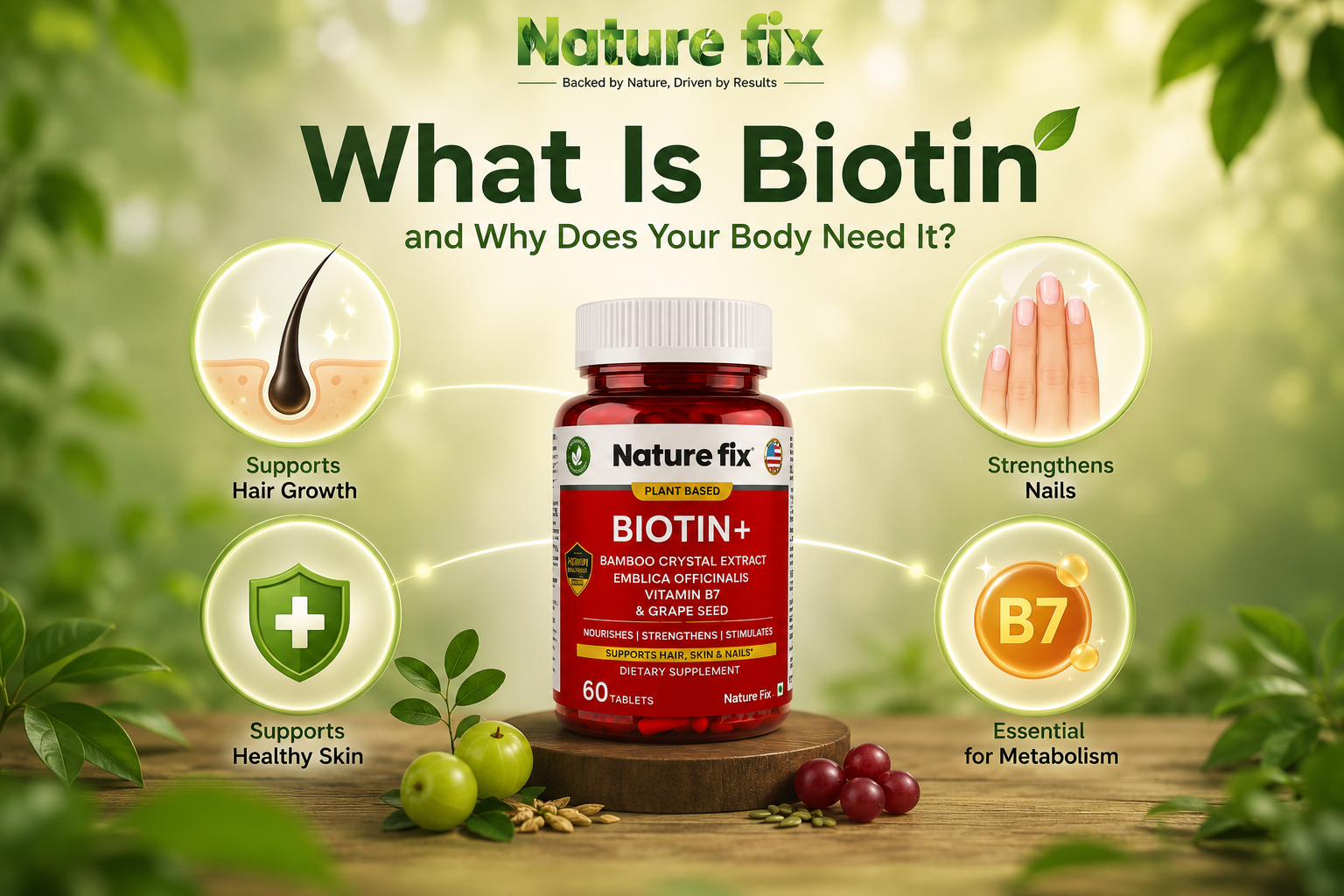
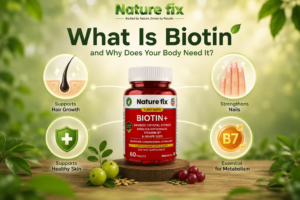
What Is Biotin and Why Does Your Body Need It?
Biotin is a water-soluble vitamin that belongs to the B vitamin family. It goes by several names Vitamin B7, Vitamin H — but its job inside your body stays the same regardless of what you call it.
Your body uses biotin every single day to convert the food you eat into usable energy. It helps process carbohydrates, break down fats, and metabolise protein — three things your body does constantly, around the clock.
Beyond energy, biotin plays a quieter but equally important role in keeping your hair growing, your nails strong, and your skin balanced. It also supports healthy nerve function and helps your liver do its job more effectively.
Key Point: Because biotin is water-soluble, your body cannot store it. Whatever is not used gets flushed out — meaning your body depends on a fresh daily supply, either from food or supplementation.
What Happens When You Do Not Get Enough Biotin?
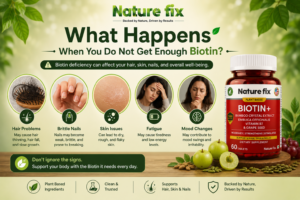
Biotin deficiency is not extremely common, but it is more widespread than many people think — particularly among those with restrictive diets, digestive issues, or certain lifestyle habits.
When your biotin levels drop below what your body needs, the signs tend to show up gradually rather than all at once. Some of the most frequently reported symptoms include:
- Hair that starts thinning or shedding more than usual
- Brittle nails that break or chip without much force
- Dry, flaky, or irritated skin — particularly around the face
- A persistent sense of tiredness that does not improve with rest
- Mild mood changes or difficulty concentrating
- Tingling or numbness in the hands and feet
If you have been noticing any combination of these and cannot link them to another obvious cause, your biotin intake may be worth looking at.
How Much Biotin Do You Need Each Day?
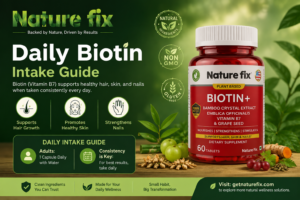
This is the question most people come looking for, and the honest answer is it depends on your age, your lifestyle, and what you are trying to achieve. Here is a straightforward breakdown:
| Age Group | Daily Biotin Requirement |
| Infants (0–12 months) | 5–6 mcg per day |
| Children (1–8 years) | 8–12 mcg per day |
| Older children (9–13 years) | 20 mcg per day |
| Teenagers (14–18 years) | 25 mcg per day |
| Adults (19 years and above) | 30 mcg per day |
| Pregnant women | 30 mcg per day |
| Breastfeeding women | 35 mcg per day |
These figures represent the adequate intake levels established by nutrition authorities the amount considered sufficient to meet the needs of most healthy people under normal circumstances.
Note: If you are dealing with noticeable hair thinning, brittle nails, or other signs of deficiency, many healthcare practitioners suggest higher supplemental doses typically ranging from 1,000 mcg to 10,000 mcg daily under proper guidance.
Can You Get Enough Biotin From Food Alone?
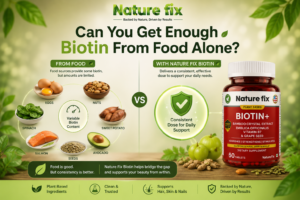
In an ideal world, a balanced diet would cover your daily biotin needs without any supplementation required. And for some people, it genuinely does. But for many others, food alone falls short either because their diet is limited, their gut does not absorb nutrients efficiently, or their daily requirements are simply higher than average.
The richest food sources of biotin include:
- Eggs cooked eggs are one of the best natural sources. Raw egg whites contain avidin, a protein that blocks biotin absorption, so always cook your eggs.
- Organ meats liver and kidney are exceptionally high in biotin, though not a regular part of most diets.
- Nuts and seeds almonds, sunflower seeds, and peanuts all contain meaningful amounts of biotin.
- Salmon and tuna fatty fish provide a reasonable amount of biotin alongside their Omega-3 content.
- Sweet potatoes one of the better plant-based sources of biotin, along with being rich in other nutrients.
- Dairy products milk, cheese, and yoghurt contribute small but consistent amounts of biotin daily.
The challenge is that biotin content in food can vary considerably depending on how the food is grown, stored, and prepared. Cooking and processing often reduce the amount of biotin available for your body to absorb.
Who Is Most Likely to Need a Biotin Supplement?
While biotin deficiency can affect anyone, certain groups of people are more vulnerable than others.
Alcohol consumers: Alcohol interferes with the way your body absorbs and uses biotin, lowering effective levels even when dietary intake appears adequate.
Pregnant women: The body’s demand for biotin increases during pregnancy. Research suggests that a significant proportion of pregnant women develop mildly low biotin levels even without obvious symptoms.
Long-term medication users: Some anticonvulsant drugs and long-term antibiotic use can deplete biotin over time by disrupting gut bacteria that contribute to biotin production.
Those with digestive conditions: Conditions that affect nutrient absorption in the gut, such as Crohn’s disease or colitis, can reduce how much biotin the body successfully takes in from food.
Restrictive dieters: Anyone significantly limiting their food variety or overall intake runs the risk of falling short on biotin along with other essential nutrients.
Does Taking More Biotin Actually Work?
This is a fair and important question. The honest answer is for people who are genuinely deficient, increasing biotin intake consistently delivers noticeable improvements, particularly in hair thickness, nail strength, and skin condition.
For people who already have adequate biotin levels, the benefits of high-dose supplementation are less dramatic but still meaningful particularly for those under physical or nutritional stress.
What biotin is not is a miracle ingredient. It works best when it is part of a thoughtful daily routine that includes proper nutrition, adequate hydration, and consistent sleep. Think of it as giving your body one important resource it needs to do what it is already trying to do grow healthy hair, maintain strong nails, and keep your skin in balance.
Patience is key: Most people who begin taking biotin consistently report visible improvements after eight to twelve weeks of uninterrupted use. Do not judge the results too early.
How Nature Fix Biotin Supports Your Daily Needs
Nature Fix Biotin is formulated for adults who want a clean, reliable daily source of this essential vitamin without unnecessary additives, artificial fillers, or ingredients they cannot pronounce.
Each tablet delivers a carefully considered dose of biotin designed to bridge the gap between what your diet provides and what your body actually needs. The formula is straightforward, the ingredients are transparent, and the intention is simple to give your body the consistent nutritional support it deserves every single day.
Whether you are dealing with noticeable hair thinning, frustratingly weak nails, or simply want to maintain the health you already have, Nature Fix Biotin fits into your routine without complication.
Simple Tips to Get the Most From Your Daily Biotin
✓ Take it at the same time every day — consistency matters more than timing, but a fixed moment helps you stay on track without thinking about it.
✓ Take it with food — while biotin does not require food to absorb, pairing it with a meal makes it easier to remember and gentler on an empty stomach.
✓ Be patient — give it at least eight weeks before drawing conclusions. Biological changes in hair and nails take time to become visible because of the natural growth cycle.
✓ Stay hydrated — since biotin is water-soluble, keeping your fluid intake up supports healthy circulation and nutrient delivery throughout the body.
✓ Avoid raw egg whites — if eggs are a regular part of your diet, always cook them to prevent the avidin in raw egg white from competing with biotin absorption.
Final Thoughts
Biotin is not complicated. It is a vitamin your body uses every day, cannot store, and consistently needs in adequate supply. Most people go about their daily lives slightly below where they should be — not dramatically deficient, but not optimally nourished either.
Understanding your daily biotin requirement is the first step. Meeting it consistently, through a combination of good food choices and reliable supplementation, is what actually makes the difference over time.
Nature Fix exists to make that part simple.
This article is for general informational purposes only and does not constitute medical advice. Consult a qualified healthcare professional before beginning any supplement regimen, particularly if you are pregnant, breastfeeding, or managing a health condition. © 2026 Nature Fix. All rights reserved.